
 English
 Pусский
 한국어
한국어 Tiếng Việt

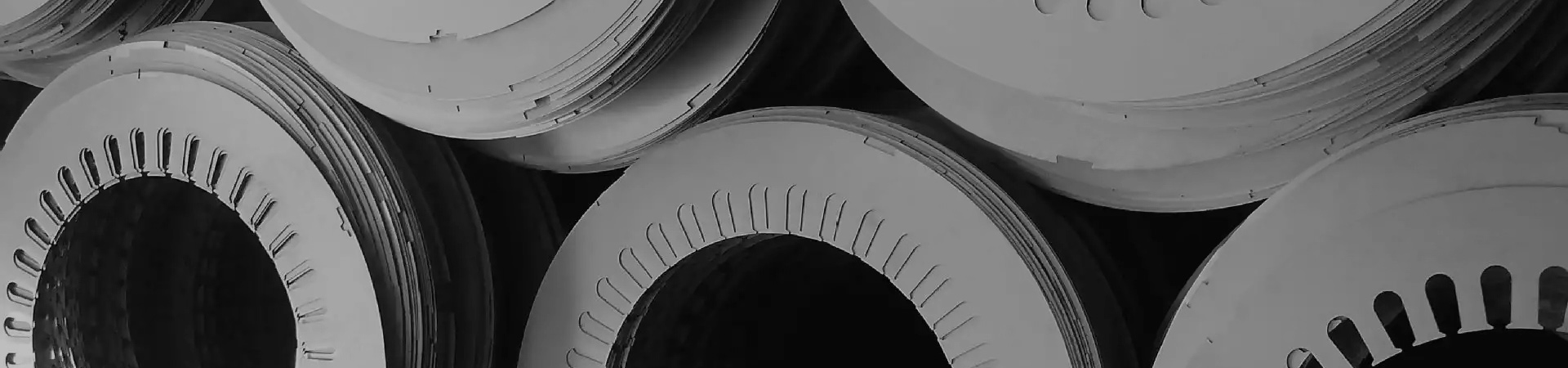
High-efficiency YVF2 motor laminations design
High-Efficiency YVF2 Motor Laminations Design The design of laminations for high-efficiency YVF2 motors plays a critical role in optimizing performance, reducing energy losses, and enhancing thermal management. Laminations are thin, stacked steel sheets that form the stator and rotor cores, minimizing eddy current losses while ensuring efficient magnetic flux distribution. Key considerations in their design include material selection, geometric optimization, and manufacturing precision. 1. Material Selection High-grade electrical steel, such as non-oriented silicon steel (NO20 or NO30), is typically used for YVF2 motor laminations due to its low core loss and high magnetic permeability. The silicon content (2-3.5%) reduces hysteresis losses, while thin gauge thickness (0.35mm or 0.5mm) minimizes eddy currents. Advanced coatings (e.g., C3 or C5 insulation) are applied to enhance interlamination resistance and prevent short-circuiting. 2. Geometric Optimization The lamination profile is designed to maximize magnetic efficiency and mechanical stability. Key features include: - Slot Design: Stator slots are optimized for winding distribution, balancing copper fill factor and magnetic saturation. Semi-closed or closed slots reduce cogging torque and improve sinusoidal flux distribution. - Pole Configuration: The number of poles (e.g., 4-pole or 6-pole) is selected based on speed and torque requirements, with careful attention to flux path continuity. - Tooth and Yoke Dimensions: Proper tooth width ensures sufficient mechanical strength while avoiding excessive magnetic saturation. The yoke thickness is calculated to maintain uniform flux density. 3. Manufacturing Precision High-precision stamping or laser cutting ensures tight tolerances (≤20µm) and smooth edges, reducing air gaps and magnetic reluctance. Stacking methods (interlocking, welding, or bonding) maintain alignment and minimize vibration. Annealing may be applied to relieve stress and improve magnetic properties. 4. Loss Reduction Techniques - Segmented Laminations: Reduces circulating currents in large motors. - Skewed Slots: Mitigates torque ripple and harmonics. - Asymmetric Designs: Improves efficiency under variable load conditions. 5. Thermal and Mechanical Considerations Laminations must withstand thermal expansion and electromagnetic forces. Ventilation ducts may be integrated to enhance cooling. In summary, YVF2 motor lamination design combines advanced materials, precision engineering, and electromagnetic optimization to achieve high efficiency, low noise, and long service life. Future trends include the use of amorphous alloys and additive manufacturing for further performance gains.
产品
分类:
-
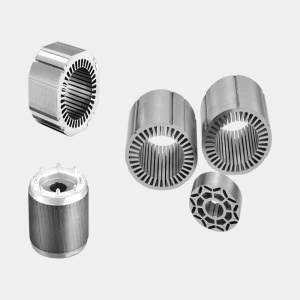
新能源汽车电机定子转子
所属分类: 定转子浏览次数: 268编号:发布时间: 2025-10-07 08:57:44新能源汽车电机定子和转子:电力推进系统的关键部件新能源汽车(NEV)产业的快速发展,使得电力推进系统的核心部件,特别是电机定子和转子受到广泛关注。这些组件在将电能转化为机械运动方面发挥着至关重要的作用,直接影响电动汽车 (EV) 的效率、性能和可靠性。本文探讨了新能源汽车电机定子和转子的设计、材料、制造工艺和技术进步。1、新能源汽车电机定转子介绍新能源汽车中的电动机依靠定子(静止部分)和转子(旋转部分)之间的相互作用来产生扭矩。定子通常由带有铜绕组的叠片铁芯组成,而转子可以设计成各种配置,例如永磁体 (PM)、感应或磁阻类型。这些设计之间的选择取决于成本、效率和应用要求等因素。2. 定子:设计和功能定子是一个关...
新闻
分类:
暂无搜索结果!
案例
分类:
暂无搜索结果!
视频
分类:
暂无搜索结果!
下载
分类:
暂无搜索结果!
招聘
分类:
暂无搜索结果!
推荐产品
暂无搜索结果!
 手机:+86 13738592999
 电话:+86(576) 89307999
 邮箱:sales@zjxinzheng.com
 地址:浙江省台州市三门沿海工业城



 Whatsapp
 电话
电话