
 English
 Pусский
 한국어
한국어 Tiếng Việt

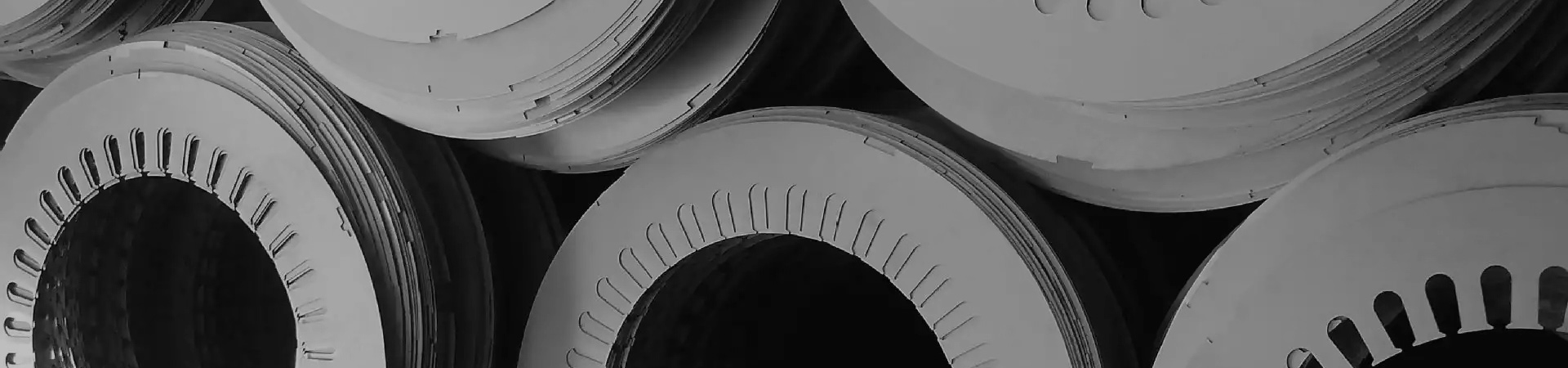
High-temperature resistant YE4 motor laminations design
Design of High-Temperature Resistant YE4 Motor Laminations The design of high-temperature resistant laminations for YE4 motors is critical to ensure optimal performance, energy efficiency, and durability under elevated operating conditions. These laminations must address thermal stability, core losses, and mechanical integrity while meeting stringent efficiency standards. Below are the key considerations in their design: 1. Material Selection The core material must exhibit low core losses and high thermal resistance. Silicon steel (electrical steel) with a high silicon content (typically 2-3%) is commonly used due to its excellent magnetic properties and reduced hysteresis losses. For high-temperature applications, grain-oriented or non-oriented silicon steel with improved thermal stability is preferred. Advanced coatings, such as inorganic insulation layers, are applied to minimize eddy current losses and withstand temperatures exceeding 200°C. 2. Lamination Thickness and Stacking Thinner laminations (typically 0.35mm or 0.5mm) reduce eddy current losses, but the trade-off between manufacturing complexity and performance must be balanced. The stacking process must ensure tight tolerances to prevent air gaps, which can increase magnetic reluctance and heat generation. Laser cutting or precision stamping is employed to maintain dimensional accuracy. 3. Insulation and Coating High-temperature-resistant insulation coatings, such as phosphate or ceramic-based layers, are applied to prevent interlamination short circuits. These coatings must remain stable under thermal cycling and mechanical stress. Additionally, oxidation-resistant treatments are used to protect the laminations in harsh environments. 4. Thermal Management Integration The lamination design should facilitate efficient heat dissipation. Ventilation slots or cooling ducts may be incorporated into the stator core to enhance airflow. The use of thermally conductive adhesives or bonding techniques can improve heat transfer from the core to the motor housing. 5. Mechanical Robustness High temperatures can cause thermal expansion, leading to deformation. The lamination design must account for thermal stress by selecting materials with matched coefficients of thermal expansion. Precision stacking and clamping mechanisms ensure structural integrity under thermal cycling. 6. Efficiency Optimization To meet IE4 efficiency standards, the core losses (hysteresis and eddy current losses) must be minimized. This involves optimizing the magnetic flux path, reducing harmonic losses, and ensuring uniform material properties. Finite element analysis (FEA) is often used to simulate performance under high-temperature conditions. Conclusion The design of high-temperature-resistant YE4 motor laminations requires a multidisciplinary approach, combining advanced materials, precision manufacturing, and thermal management strategies. By focusing on low-loss materials, robust insulation, and efficient cooling, these laminations can deliver reliable performance in demanding applications while maintaining energy efficiency. Future advancements may explore nanocrystalline alloys or hybrid materials for even higher temperature resistance and reduced losses.
产品
分类:
-
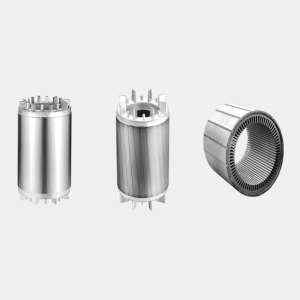
电动机定子转子
所属分类: 定转子浏览次数: 118编号:发布时间: 2025-10-07 08:45:12电机定子和转子:机电系统的核心部件电动机是现代技术的基础,为从家用电器到工业机械的一切设备提供动力。每个电动机的核心都有两个关键部件:定子和转子。这些部件协同工作,将电能转化为机械运动。了解它们的设计、功能和交互对于掌握电动机的工作原理至关重要。1. 定子和转子简介定子是电动机的静止部件,而转子是旋转部件。它们共同构成了机电能量转换的核心。定子产生磁场,该磁场与转子相互作用产生扭矩,导致转子转动。该原理适用于各种电机类型,包括 AC(交流)和 DC(直流)电机。2. 定子:结构与功能定子由几个关键元件组成:- 核心:通常由层压钢制成,以减少涡流造成的能量损失。- 绕组:铜或铝线圈排列在磁芯周围的槽中。当通电时...
新闻
分类:
暂无搜索结果!
案例
分类:
暂无搜索结果!
视频
分类:
暂无搜索结果!
下载
分类:
暂无搜索结果!
招聘
分类:
暂无搜索结果!
推荐产品
暂无搜索结果!
 手机:+86 13738592999
 电话:+86(576) 89307999
 邮箱:sales@zjxinzheng.com
 地址:浙江省台州市三门沿海工业城



 Whatsapp
 电话
电话