
 English
 Pусский
 한국어
한국어 Tiếng Việt

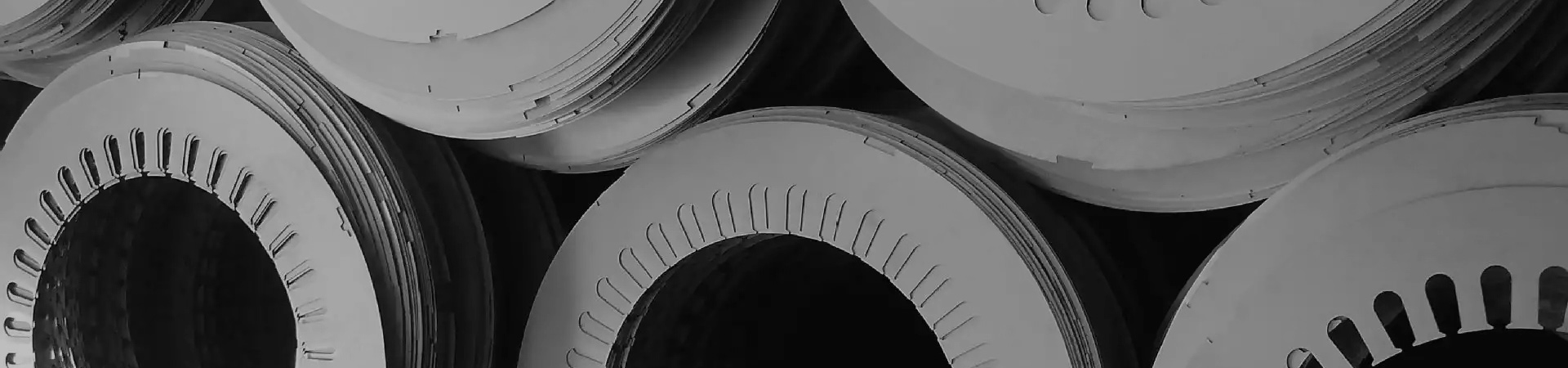
Low carbon steel YE5 motor laminations manufacturing
Manufacturing of Low Carbon Steel YE5 Motor Laminations The production of low carbon steel laminations for YE5 motors involves a series of precise and controlled processes to ensure high efficiency, reduced energy loss, and optimal magnetic performance. Low carbon steel is widely used in motor laminations due to its excellent magnetic properties, low hysteresis loss, and cost-effectiveness. Below is an overview of the key manufacturing steps: 1. Material Selection The process begins with selecting high-quality low carbon steel (typically with a carbon content below 0.1%). The steel must have high magnetic permeability, low coercivity, and minimal impurities to minimize eddy current losses. Silicon may be added to enhance resistivity and reduce core losses. 2. Coil Slitting The steel is supplied in large coils, which are slit into narrower strips of the required width using precision slitting machines. This step ensures uniform dimensions for subsequent stamping. 3. Blanking and Stamping The slit steel strips are fed into high-speed progressive stamping dies, which punch out the lamination profiles. The dies are designed to produce the exact shape of the motor stator and rotor laminations with tight tolerances. Advanced stamping techniques minimize burrs and ensure smooth edges to prevent short-circuiting between layers. 4. Heat Treatment (Annealing) After stamping, the laminations undergo annealing—a heat treatment process that relieves internal stresses caused by mechanical deformation. The laminations are heated in a controlled atmosphere (e.g., hydrogen or nitrogen) to restore magnetic properties and improve grain structure. 5. Insulation Coating To further reduce eddy current losses, an insulating coating (such as phosphate, oxide, or organic varnish) is applied to the laminations. This thin dielectric layer prevents electrical contact between stacked laminations while maintaining thermal conductivity. 6. Stacking and Bonding The individual laminations are stacked and aligned precisely to form the motor core. They may be bonded using adhesives, interlocking tabs, or welding (though welding is minimized to avoid magnetic degradation). Proper stacking ensures uniform magnetic flux distribution. 7. Quality Control Throughout the process, rigorous quality checks are performed, including dimensional inspection, coating thickness measurement, and magnetic property testing. Eddy current testers and visual inspections ensure defect-free laminations. 8. Final Assembly The finished lamination stacks are assembled into motor stators or rotors, where they interact with windings to produce efficient electromagnetic performance. Advantages of Low Carbon Steel in YE5 Motors - High Efficiency: Low core losses improve motor energy efficiency. - Cost-Effective: Low carbon steel is economical compared to specialized alloys. - Durability: Proper annealing enhances mechanical strength and longevity. By optimizing material selection, stamping precision, and insulation techniques, manufacturers ensure that low carbon steel YE5 motor laminations meet stringent performance standards for modern electric motors.
产品
分类:
-
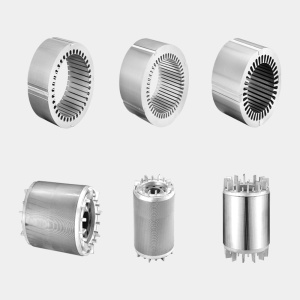
电机定转子叠片
所属分类: 定转子浏览次数: 235编号:发布时间: 2025-10-07 08:41:53了解电机定子、转子和叠片:电机的关键部件电动机是现代技术的基础,为从家用电器到工业机械的一切设备提供动力。这些电机的核心是定子、转子和叠片等关键部件,每个部件在将电能转化为机械运动方面都发挥着至关重要的作用。本文探讨了这些元件在运动性能中的设计、功能和重要性。1. 定子:静止的核心定子是电动机的静态部分,通常由圆柱形铁芯组成,该铁芯具有均匀分布的槽以容纳铜绕组。当通电时,这些绕组产生旋转磁场,该磁场与转子相互作用以产生运动。定子结构- 叠片铁芯:定子铁芯由称为叠片的薄绝缘钢板制成。这些叠片减少了涡流引起的能量损失,提高了效率。- 绕组:铜或铝线圈插入定子槽中。这些绕组的布置(例如集中式或分布式)会影...
新闻
分类:
暂无搜索结果!
案例
分类:
暂无搜索结果!
视频
分类:
暂无搜索结果!
下载
分类:
暂无搜索结果!
招聘
分类:
暂无搜索结果!
推荐产品
暂无搜索结果!
 手机:+86 13738592999
 电话:+86(576) 89307999
 邮箱:sales@zjxinzheng.com
 地址:浙江省台州市三门沿海工业城



 Whatsapp
 电话
电话