
 English
 Pусский
 한국어
한국어 Tiếng Việt

电机铁芯设计优化
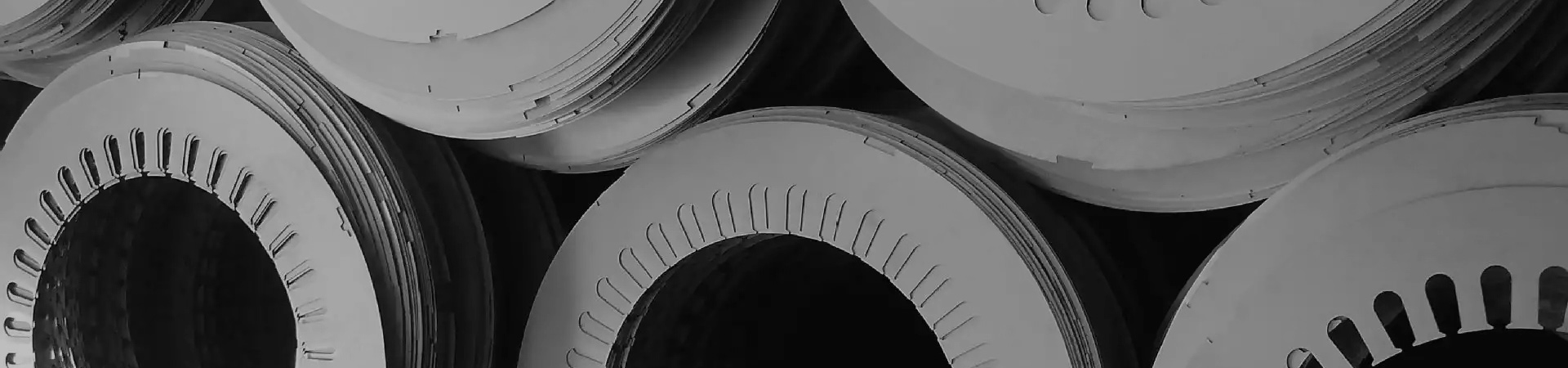
Motor Core Design Optimization Motor core design optimization is a critical process in enhancing the performance, efficiency, and cost-effectiveness of electric motors. The motor core, typically made of laminated electrical steel, serves as the magnetic circuit that facilitates energy conversion. Optimizing its design involves balancing multiple factors, including material selection, geometric parameters, manufacturing techniques, and electromagnetic performance. Key Aspects of Motor Core Optimization 1. Material Selection The choice of core material significantly impacts motor efficiency. Electrical steel laminations with high magnetic permeability and low core losses (hysteresis and eddy current losses) are preferred. Advanced materials like amorphous alloys or soft magnetic composites (SMCs) may be considered for high-frequency applications. 2. Geometric Optimization The shape and dimensions of the stator and rotor cores influence magnetic flux distribution and torque production. Key parameters include: - Slot and Pole Configuration: Affects torque ripple and cogging torque. - Air Gap Length: A smaller gap improves efficiency but increases manufacturing complexity. - Tooth and Yoke Design: Optimized to minimize flux saturation and losses. 3. Manufacturing Techniques - Lamination Stacking: Precision stacking reduces air gaps between layers, lowering eddy current losses. - Laser or Wire Cutting: Ensures minimal material deformation and burr formation. - Heat Treatment: Improves magnetic properties by relieving mechanical stresses. 4. Electromagnetic Performance Finite element analysis (FEA) is widely used to simulate magnetic flux density, core losses, and thermal behavior. Multi-objective optimization algorithms help balance trade-offs between efficiency, power density, and cost. 5. Thermal and Mechanical Considerations Core losses generate heat, so thermal management must be integrated into the design. Mechanical robustness is also crucial to withstand electromagnetic forces and vibrations. Challenges and Future Trends Challenges include balancing cost and performance, especially in high-volume production. Future trends focus on additive manufacturing for complex core shapes, AI-driven design automation, and advanced materials like nanocrystalline alloys. In summary, motor core optimization is a multidisciplinary effort that requires careful consideration of electromagnetic, thermal, and mechanical factors to achieve high-performance, energy-efficient motors.
产品
分类:
暂无搜索结果!
新闻
分类:
-
[Industry News]如何为您的应用选择合适的电机铁芯
2025-09-30 16:10:20 -
[Company News]电机铁芯损耗原因及有效解决方法
2025-10-07 17:11:41
案例
分类:
暂无搜索结果!
视频
分类:
暂无搜索结果!
下载
分类:
暂无搜索结果!
招聘
分类:
暂无搜索结果!
推荐产品
暂无搜索结果!
 手机:+86 13738592999
 电话:+86(576) 89307999
 邮箱:sales@zjxinzheng.com
 地址:浙江省台州市三门沿海工业城



 Whatsapp
 电话
电话