
 English
 Pусский
 한국어
한국어 Tiếng Việt

降低电机定子铁芯损耗
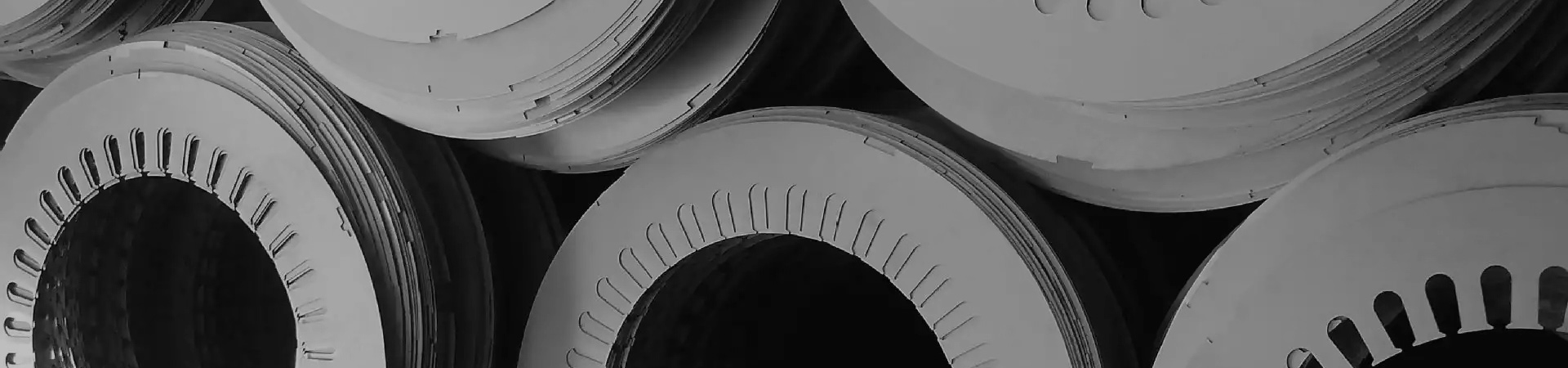
Motor Stator Core Loss Reduction Techniques Core loss in motor stators, also known as iron loss, is a critical factor affecting motor efficiency, especially in high-performance applications. It consists of hysteresis loss and eddy current loss, both of which contribute to energy dissipation and heat generation. Reducing core loss improves motor efficiency, extends lifespan, and lowers operating costs. Below are key strategies for minimizing stator core losses. 1. Material Selection The choice of core material significantly impacts hysteresis and eddy current losses. High-quality electrical steel with low coercivity and high resistivity is preferred. Silicon steel (laminated steel) is widely used due to its reduced hysteresis loss and superior magnetic properties. Amorphous metals or nanocrystalline materials offer even lower core losses but may increase manufacturing costs. 2. Lamination Thickness Optimization Thinner laminations reduce eddy current losses by increasing resistance to circulating currents. Typical thicknesses range from 0.1 mm to 0.5 mm, with thinner laminations being more effective at high frequencies. However, excessively thin laminations may increase manufacturing complexity and cost. 3. Insulation Coating Applying an insulating coating (e.g., oxide or varnish) between laminations prevents interlayer eddy currents. A uniform, high-resistance coating ensures minimal electrical contact between layers, further reducing losses. 4. Core Design Optimization - Flux Path Optimization: Reducing flux density variations minimizes hysteresis loss. Proper stator slot and tooth design ensures uniform magnetic flux distribution. - Minimizing Air Gaps: Precise manufacturing reduces air gaps, lowering magnetizing current and associated losses. - Segmented Cores: Using segmented stator cores can reduce eddy current loops, particularly in large motors. 5. Advanced Manufacturing Techniques - Precision Stamping: High-quality stamping reduces burrs and imperfections that increase eddy currents. - Annealing: Heat treatment after stamping relieves mechanical stresses, improving magnetic properties and reducing hysteresis loss. 6. Operating Condition Management - Frequency Control: Operating at optimal frequencies avoids excessive eddy current losses, especially in variable-speed drives. - Temperature Control: Cooling systems (e.g., forced air or liquid cooling) prevent overheating, which can degrade core material properties. Conclusion Reducing stator core losses requires a combination of material selection, design optimization, and manufacturing precision. While some methods (e.g., advanced materials) may increase initial costs, the long-term benefits in efficiency and reliability justify the investment. Future advancements in materials science and manufacturing technologies will further enhance core loss reduction techniques, enabling more energy-efficient motor designs. By implementing these strategies, engineers can achieve significant improvements in motor performance while minimizing energy waste.
产品
分类:
暂无搜索结果!
新闻
分类:
-
[Company News]实现最佳性能的电机定子绕组技术
2025-10-07 16:36:45
案例
分类:
暂无搜索结果!
视频
分类:
暂无搜索结果!
下载
分类:
暂无搜索结果!
招聘
分类:
暂无搜索结果!
推荐产品
暂无搜索结果!
 手机:+86 13738592999
 电话:+86(576) 89307999
 邮箱:sales@zjxinzheng.com
 地址:浙江省台州市三门沿海工业城



 Whatsapp
 电话
电话