
 English
 Pусский
 한국어
한국어 Tiếng Việt

电机定子散热
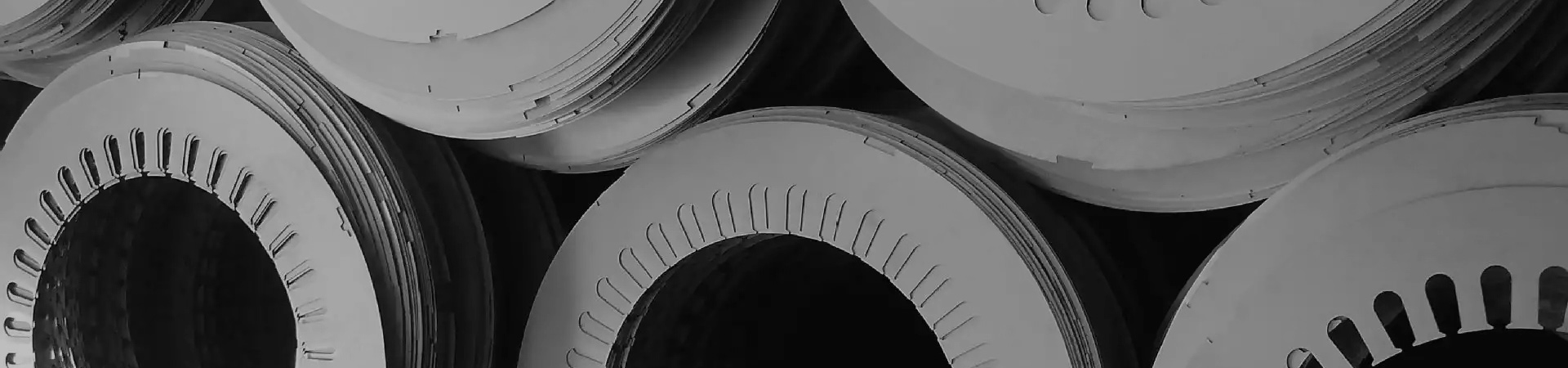
Motor Stator Heat Dissipation: Principles and Methods The stator is a critical component in electric motors, generating heat due to copper losses (I²R losses) in the windings and core losses (hysteresis and eddy currents) in the laminated steel. Efficient heat dissipation is essential to maintain optimal performance, prevent insulation degradation, and extend motor lifespan. This article explores the principles and methods of stator heat dissipation in electric motors. 1. Heat Generation in the Stator Heat in the stator primarily arises from: - Copper Losses: Resistive heating in the windings increases with current. - Core Losses: Hysteresis and eddy currents in the stator laminations generate additional heat. - Stray Losses: High-frequency effects in conductors and magnetic materials contribute to localized heating. Excessive heat can degrade insulation, reduce efficiency, and cause thermal expansion, leading to mechanical stress. 2. Heat Transfer Mechanisms Heat is dissipated through three fundamental mechanisms: - Conduction: Heat flows through solid materials (e.g., from windings to the stator core). - Convection: Air or liquid coolant carries heat away from surfaces. - Radiation: Infrared emission transfers heat to the surroundings (less significant in enclosed motors). 3. Cooling Methods for Stator Heat Dissipation Air Cooling - Natural Convection: Passive cooling relies on ambient airflow, suitable for small, low-power motors. - Forced Air Cooling: Fans or blowers enhance airflow, improving heat transfer in medium-power motors. Liquid Cooling - Direct Cooling: Coolant (e.g., oil or water-glycol) flows through channels in the stator or housing, offering high heat transfer efficiency. - Indirect Cooling: Cold plates or jackets absorb heat from the stator, common in high-power applications like EVs and industrial motors. Advanced Cooling Techniques - Heat Pipes: Passive two-phase heat transfer devices efficiently move heat from hotspots. - Phase-Change Materials (PCMs): Absorb heat during melting, useful for intermittent high-load conditions. - Spray Cooling: Direct liquid spray on windings provides rapid cooling in high-density motors. 4. Thermal Management Design Considerations - Material Selection: High thermal conductivity materials (e.g., aluminum housings, thermally conductive insulation) improve heat dissipation. - Winding Design: Optimized conductor arrangement reduces hotspots. - Coolant Flow Optimization: Ensuring uniform coolant distribution prevents thermal gradients. 5. Conclusion Effective stator heat dissipation is vital for motor reliability and efficiency. Depending on power levels and operating conditions, air cooling, liquid cooling, or advanced techniques can be employed. Future advancements in materials and cooling technologies will further enhance thermal management in electric motors.
产品
分类:
暂无搜索结果!
新闻
分类:
-
[Company News]实现最佳性能的电机定子绕组技术
2025-10-07 16:36:45 -
[Company News]在 HVAC 系统中选择正确电机定子的技巧
2025-10-08 09:01:33
案例
分类:
暂无搜索结果!
视频
分类:
暂无搜索结果!
下载
分类:
暂无搜索结果!
招聘
分类:
暂无搜索结果!
推荐产品
暂无搜索结果!
 手机:+86 13738592999
 电话:+86(576) 89307999
 邮箱:sales@zjxinzheng.com
 地址:浙江省台州市三门沿海工业城



 Whatsapp
 电话
电话